
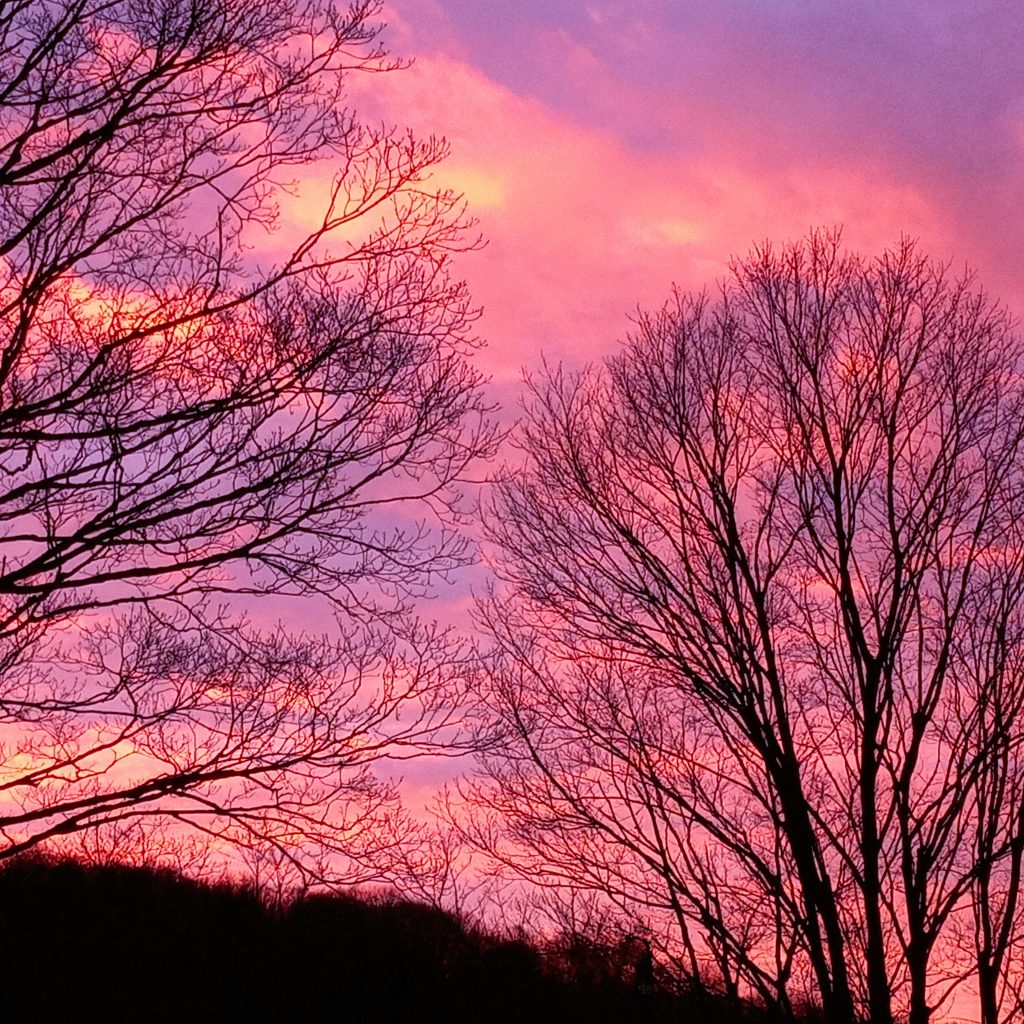
Weather patterns vary widely throughout the U.S. and weather in one region doesn’t necessarily affect conditions in another region. In general, weather moves across the country from west to east but even that general observation does not always hold true. Here in the Northeast, two major bodies of water (the Great Lakes and the Atlantic Ocean) can have significant weather impacts. Often these bodies contribute humidity and rain or snow year-round. And it is regularly noted that the Northeast is one of the cloudiest areas of the U.S. Those clouds hide the sun, provide a breeding ground for precipitation, and sometimes contribute to spectacular sunsets.
The area of the Northeast where I live has seen a cooler and wetter spring than average. For the month of April, there have only been a couple of days where the temperatures have even equaled the average highs, let alone surpass them. Looking toward May doesn’t appear to present improving conditions. In general, the spring has so far been chilly when compared to historical trends. Additionally, there has been an abundance of rain, but thankfully not enough to trigger widespread areal flooding concerns. But there have been a number of freeze and frost warnings, seemingly more than in a typical year. This particular weather pattern has had an impact on birds, wildlife, and outdoor photographers.
Chilly wet weather often has negative effects on nesting birds and their eggs. This type of weather can slow the northward migration of birds, which then delays the building of nests and the laying of eggs. Even if these are not necessarily delayed by the weather, the weather can alter the availability of food for adult birds and can quickly chill the eggs that have been laid, affecting their viability. Similar effects can be seen on other wildlife, making long-term survival more difficult. Young are born into challenging circumstances and are as much or more at risk as the adult animals. They often stay within a small range to avoid expending extra energy which can deplete their food supply more quickly.
Outdoor photographers also have a difficult time during these chilly wet conditions. Rain is a real threat to sensitive equipment, colder temperatures reduce battery life, and the increased clouds reduce available light. This can be helpful for midday photographs but can often alter the light during the Golden Hour (dawn) and the Blue Hour (sunset). Those are both favorite times to obtain striking photographs when the light is right. Often, the clouds will make the colors look too drab and spring flowers are either delayed or they quickly bloom then fade.
A chilly wet spring can be a challenge for birds, wildlife, and photographers. We must all persevere through the conditions presented. Even when the weather is uncooperative, sometimes it all works out for the best. Birds and animals survive and perhaps emerge stronger for the struggle. Photographers occasionally get the right weather conditions at the right time to capture a special scene. Hopefully it all works out in the end.